
Industrial Shot Blasting Safety: PPE, Dust Collection & Maintenance
Explore industrial shot blasting safety guidelines covering PPE requirements, dust collection systems, proper ventilation, machine inspections, abrasive recycling, and preventive maintenance to ensure safer and more efficient blasting operations.
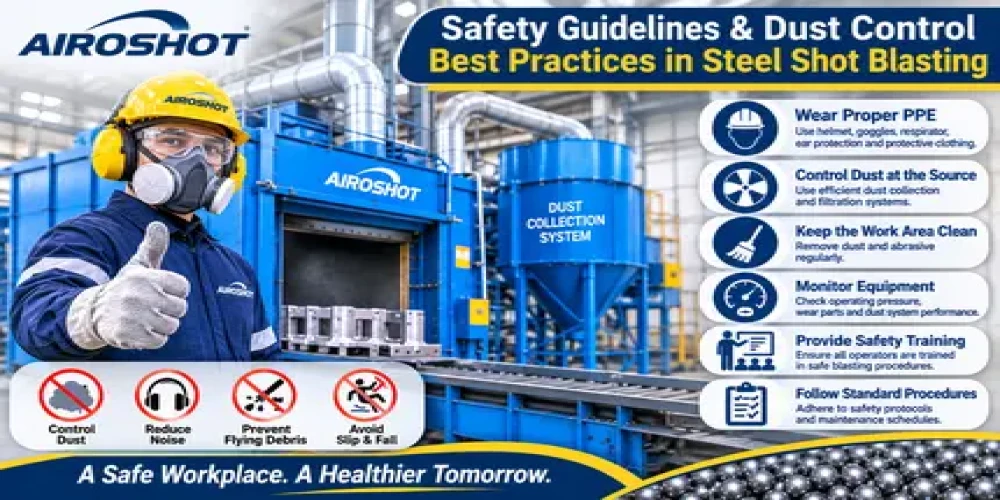
Why Steel Shot Blasting Safety and Dust Control Matter in Industrial Operations
Steel shot blasting is widely used in manufacturing, automotive, fabrication, and heavy engineering industries to remove rust, mill scale, and surface contaminants from metal components. However, blasting operations can generate airborne dust, flying abrasiveIndustrial Shot Blasting Safety: PPE, Dust Collection & Maintenance
particles, and excessive noise, creating potential workplace hazards.
Following proper steel shot blasting safety guidelines helps protect operators and maintain efficient production. Effective dust collection, proper ventilation, suitable personal protective equipment (PPE), and regular machine inspections are essential for controlling these risks. Implementing these practices also helps reduce equipment damage, prevent unexpected downtime, and maintain a safer industrial working environment.
Major Workplace Safety Risks in Steel Shot Blasting Operations
Before starting a blasting operation, workers should understand the potential hazards associated with the process. Identifying these risks helps prevent accidents and supports better workplace safety management.
Some common hazards include:
- Airborne dust: Rust, paint particles, mill scale, and broken abrasive particles generated during steel shot for fabrication can become airborne during operations.
- Flying abrasive particles: High speed steel shot can cause injuries if workers enter restricted operating areas.
- Excessive noise: Blast wheels, motors, compressors, and material handling systems can generate high noise levels.
- Mechanical hazards: Rotating blast wheels, conveyors, bucket elevators, and other moving components can cause injuries.
- Slipping hazards: Spilled steel shot on floors and walkways can create unsafe working conditions.
Identifying these risks before production begins allows operators to implement suitable preventive measures.
Essential PPE Requirements for Steel Shot Blasting Safety
Personal protective equipment is an essential part of industrial shot blasting safety. Operators should wear suitable protective equipment according to the machine design, working conditions, and exposure assessment.
Important PPE includes:
- Safety helmet: Protects the head from accidental impacts.
- Protective goggles or face shield: Helps prevent eye injuries from flying particles.
- Hearing protection: Earplugs or earmuffs help reduce exposure to industrial noise.
- Safety gloves: Protect hands during steel shot handling, abrasive media loading and shot blasting machine maintenance.
- Safety footwear: Provides foot protection and improves stability in industrial areas.
- Respiratory protection: Suitable respirators or supplied air equipment should be selected according to the dust hazards and exposure assessment.
Workers performing manual blasting inside blast rooms may require specialized blasting helmets and supplied air respiratory protection.
PPE should be inspected regularly, cleaned properly, and replaced whenever damaged. It should always be used alongside engineering controls rather than as a replacement for effective dust extraction and ventilation.
Dust Control in Steel Shot Blasting: Role of Industrial Dust Collection Systems
Dust control is one of the most important requirements for maintaining a clean and safe blasting environment.
During steel shot blasting, dust can develop from rust, paint coatings, mill scale, surface contaminants, and fractured abrasive particles. If this dust is not collected properly, it can spread into nearby production areas and reduce workplace visibility.
An efficient industrial dust collection system helps capture dust-laden air before it spreads throughout the facility.
Important components include:
- Dust collector: Captures and separates airborne dust from extracted air.
- Exhaust ducting: Transfers contaminated air from the blasting enclosure to the collector.
- Air filtration system: Filters fine particles from the extracted air.
- Exhaust fan: Maintains the required airflow through the dust extraction arrangement.
- Dust discharge arrangement: Allows collected dust to be removed safely.
Technical Specifications for an Industrial Shot Blasting Dust Collection System
A dust collection system should be selected according to the shot blasting machine capacity, chamber size, abrasive flow, and dust generation level. The following table highlights important technical parameters to consider when selecting an industrial dust collection system.
|
Technical Specification |
Key Requirement |
Purpose |
|
Dust collector type |
Cartridge or bag filter |
Captures airborne dust particles |
|
Filtration system |
Industrial-grade filtration |
Separates dust from extracted air |
|
Airflow capacity |
Based on machine and enclosure requirements |
Maintains effective dust extraction |
|
Exhaust fan |
Industrial centrifugal fan |
Maintains required airflow |
|
Ducting system |
Properly sized industrial ducting |
Transfers dust-laden air |
|
Filter cleaning system |
Pulse-jet cleaning, where suitable |
Removes accumulated dust from filters |
|
Dust discharge |
Sealed collection arrangement |
Prevents dust from escaping |
|
Pressure monitoring |
Differential pressure gauge |
Monitors filter condition |
|
Maintenance |
Regular inspection and filter cleaning |
Maintains collection efficiency |
Note: These are selection parameters, not fixed machine specifications. Actual airflow, filtration efficiency, and filter area should be determined through engineering calculations and dust hazard assessment.
Regular inspection of filters, duct connections, and extraction performance helps maintain effective dust control.
Proper Ventilation Requirements for Industrial Shot Blasting Areas
Proper ventilation helps remove airborne contaminants and maintain suitable visibility inside enclosed blasting areas. In a dust less blasting machine, effective dust extraction and ventilation are essential for maintaining a cleaner and safer wo rking environment.
In automatic shot blasting machines, the blasting chamber should be connected to an appropriately designed exhaust ventilation system. This helps prevent dust from escaping into surrounding workspaces.
Follow these ventilation practices:
- Check exhaust fans before starting production.
- Keep ventilation ducts free from blockages.
- Inspect chamber doors and sealing arrangements.
- Maintain the required airflow throughout blasting operations.
- Allow sufficient time for airborne dust to clear before opening the chamber.
Operators should never open a blasting chamber immediately after the machine stops if dust remains suspended inside. The exhaust system should continue operating until the atmosphere has cleared sufficiently.
Proper ventilation also supports the performance of the dust collection system and helps maintain a cleaner production area.
Shot Blasting Machine Safety Procedures for Daily Operations
Correct machine operation helps prevent accidents, equipment damage, and unnecessary production interruptions.
Operators should receive proper training before handling industrial shot blasting equipment.
Important safety practices include:
- Inspect blast wheel blades, the impeller, control cage, and protective liners before operation.
- Check that machine guards and chamber doors are properly secured.
- Ensure abrasive circulation and recovery systems are functioning correctly.
- Never open inspection doors while the machine is operating.
- Keep hands away from moving conveyors and rotating components.
- Stop and isolate the machine before performing maintenance.
- Follow the manufacturer's operating instructions and recommended abrasive loading limits.
Emergency stop systems should remain accessible, and workers should understand the correct shutdown procedure.
Following these practices helps maintain safe and consistent shot blasting operations.
Abrasive Recycling and Separation: How to Maintain Steel Shot Quality
Steel shot is commonly recycled through abrasive recovery and separation systems in automatic blasting machines.
However, repeated use can produce broken particles, fine dust, and undersized abrasive material. If these contaminants are not removed, they can affect blasting performance and increase dust circulation.
A properly maintained abrasive recycling system generally includes:
- Abrasive collection hopper
- Screw conveyor or collection arrangement
- Bucket elevator
- Air wash separator
- Storage hopper
- Dust collection equipment
The air wash separator removes lightweight contaminants and broken abrasive particles from reusable steel shot. This helps maintain abrasive quality and supports consistent surface preparation.
Regular inspection of the separator, elevator, and abrasive circulation system helps prevent blockages and unnecessary dust accumulation.
An efficient abrasive recycling arrangement can also reduce abrasive wastage and support more economical blasting operations.
Industrial Housekeeping Practices for Better Shot Blasting Dust Control
Good housekeeping is another important part of dust control in steel shot blasting facilities.
Accumulated dust and spilled abrasive material can create slipping hazards, affect equipment performance, and increase airborne contamination during cleaning.
Recommended housekeeping practices include:
- Clean spilled steel shot from floors and walkways immediately.
- Use suitable industrial vacuum systems with appropriate filtration.
- Avoid using compressed air to blow accumulated dust from floors, clothing, or equipment.
- Dispose of collected dust according to its composition and applicable environmental requirements.
- Keep maintenance areas and emergency access routes clear.
- Clean dust collection equipment using safe procedures.
Suitable HEPA-filtered industrial vacuum systems may be used where appropriate for the dust hazards. Compressed air should not be used for routine cleaning because it can redistribute airborne contaminants.
Consistent housekeeping improves workplace conditions and helps prevent unnecessary equipment contamination.
Preventive Maintenance Checklist for Shot Blasting Machine Safety
Regular preventive maintenance helps identify equipment problems before they develop into serious safety or production issues.
Shot Blasting Machine Safety Inspection Specifications
|
Machine Component |
Inspection Requirement |
Safety Objective |
|
Blast wheel blades |
Check cracks and uneven wear |
Prevent component failure |
|
Control cage |
Inspect abrasive-related wear |
Maintain proper abrasive flow |
|
Impeller |
Check damage and installation |
Ensure stable operation |
|
Chamber liners |
Inspect damage and wear |
Prevent abrasive leakage |
|
Dust collector |
Check filters and dust accumulation |
Maintain dust extraction |
|
Exhaust fan |
Inspect airflow and performance |
Ensure proper ventilation |
|
Conveyor system |
Check belts, bearings, and guards |
Prevent mechanical hazards |
|
Emergency stop |
Test according to safety procedures |
Support emergency shutdown |
Additional maintenance practices include:
- Replace damaged or excessively worn liners.
- Inspect filter connections and ductwork for leakage.
- Check abrasive circulation and separation equipment.
- Maintain inspection and maintenance records.
- Follow the manufacturer's recommended servicing schedule.
Maintenance should always be performed after the machine has been safely isolated from its energy sources. Follow applicable lockout/tagout procedures before servicing equipment.
Regular inspections help improve machine reliability, reduce unexpected downtime, and maintain consistent blasting performance.
Worker Training and Safety Monitoring in Steel Shot Blasting Facilities
Even well designed equipment cannot ensure workplace safety without trained operators, especially when handling steel shot for shot blasting in industrial facilities.
Regular safety training helps workers understand machine operating procedures, dust exposure risks, emergency responses, and equipment maintenance requirements.
Industrial facilities should:
- Conduct regular safety awareness sessions.
- Train operators in emergency shutdown procedures.
- Explain the correct use of PPE.
- Monitor dust and noise exposure where required.
- Maintain machine inspection and maintenance records.
- Review safety procedures whenever equipment or production conditions change.
Workplace exposure assessments should consider not only steel shot but also the material being blasted and any existing surface coatings. Some coatings may contain hazardous substances that require additional controls.
A trained workforce can identify potential problems early and follow safer operating procedures throughout the production process.
Conclusion
Steel shot blasting safety depends on a combination of proper machine operation, effective dust collection, suitable PPE, abrasive quality management, and preventive maintenance.
Installing an efficient industrial dust extraction system, maintaining proper ventilation, inspecting abrasive recycling equipment, and training operators can help reduce workplace risks and improve production reliability.
For industrial facilities, investing in reliable shot blasting equipment and effective dust control arrangements is not just a safety requirement; it also supports better surface preparation, reduced downtime, and long term operational efficiency.
You may also like
 Shot Blasting Machine
How to reduce shot blasting machine wear and maintenance costs
Discover practical ways to reduce shot blasting machine wear and maintenance costs through proper abrasive selection, regular inspections, preventive maintenance, efficient abrasive recovery, and quality replacement parts to improve machine performance and extend equipment life.
Read Article Shot Blasting Machine
What is a Dustless Blasting Machine?
A dustless blasting machine is a new eco-friendly way to get paint, rust, and coatings off things. Unlike regular blasting which makes a lot of dust, dustless blasting uses a vacuum pump and water to control the dust.
Read Article Shot Blasting Machine
What is the Difference Between Shot Blasting and Shot Peening?
Manufactured metal parts aren't prepared to utilize directly out of the form. They frequently need a layer of paint, powder covering, or welding work. However, before this can occur, the outside of the metal part should be spotless.
Read Article