
How to reduce shot blasting machine wear and maintenance costs
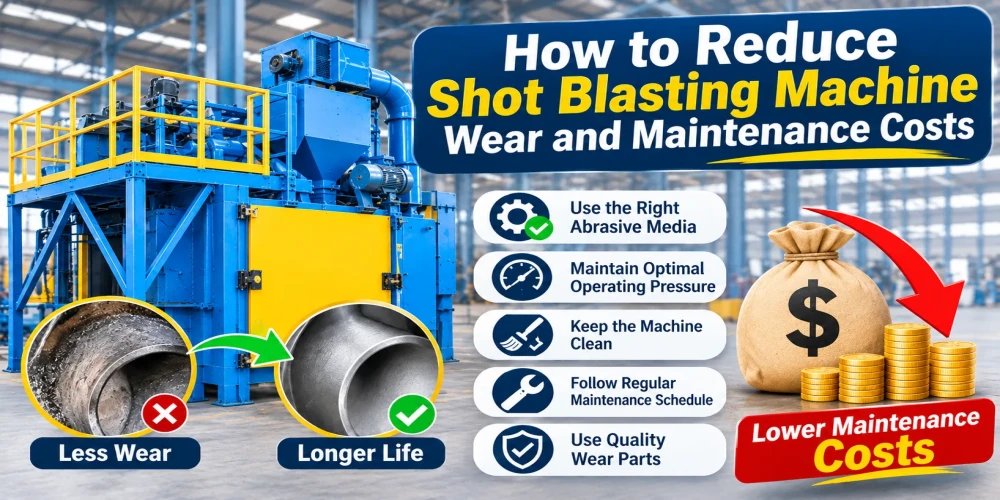
How to Reduce Shot Blasting Machine Wear and Maintenance Costs
Running a shot blasting machine continuously can be expensive when machine components wear out frequently or unexpected breakdowns interrupt production. Components such as blast wheels, blades, liners, impellers, and abrasive recovery systems are exposed to repeated impact and friction during operation.
how can you reduce shot blasting machine wear and maintenance costs without affecting surface preparation quality?
For industrial manufacturers, reducing these maintenance expenses is not just about repairing machines when something goes wrong. It is about preventing unnecessary wear, improving operating practices, and maintaining equipment before major failures occur.
Understand the Main Causes of Shot Blasting Machine Wear
Before reducing maintenance costs, it is important to understand which machine components experience the most wear.
A shot blasting machine uses high speed abrasive particles to clean metal surfaces. During this process, several internal components are exposed to continuous impact.
Common wear prone components include:
- Blast Wheel Blades: Continuous abrasive movement can gradually damage blade surfaces.
- Control Cage: Incorrect abrasive distribution can cause uneven wear and reduce blasting efficiency.
- Impeller: Direct contact with abrasive particles can lead to surface deterioration.
- Machine Liners: Internal protective liners experience repeated abrasive impact.
- Abrasive Recovery System: Elevators, screens, and separators can wear due to continuous material movement.
Identifying these components early helps maintenance teams plan inspections and avoid expensive replacements.
Common Shot Blasting Machine Wear Parts and Maintenance Solutions
|
Machine Component |
Common Wear Problem |
Maintenance Solution |
|
Blast Wheel Blades |
Abrasive impact and blade damage |
Regular inspection and timely replacement |
|
Control Cage |
Uneven abrasive distribution |
Check alignment and wear |
|
Impeller |
Abrasive impact damage |
Inspect and replace when required |
|
Machine Liners |
Continuous abrasive friction |
Check liner thickness |
|
Bucket Elevator |
Belt and bucket wear |
Inspect belts and buckets regularly |
Use the Correct Abrasive Media
Abrasive selection plays a major role in shot blasting machine wear and maintenance costs.
Using the wrong abrasive size, hardness, or type can increase component damage and affect cleaning performance.
For example, steel shot is commonly used for cleaning and peening applications, while steel grit is suitable for applications requiring a more aggressive cutting action.
Steel Shot vs Steel Grit: Which Is Better for Shot Blasting?
|
Comparison Factor |
Steel Shot |
Steel Grit |
|
Particle Shape |
Spherical |
Angular |
|
Cleaning Action |
Peening and impact cleaning |
Cutting and aggressive cleaning |
|
Surface Finish |
Generally smoother |
Generally rougher |
|
Best Application |
Cleaning and shot peening |
Rust and mill scale removal |
|
Reusability |
Multiple recycling cycles |
Multiple recycling cycles |
|
Common Use |
Automotive and foundry industries |
Steel fabrication and heavy engineering |
Consider these factors when selecting abrasive media:
- Select the correct abrasive size for the workpiece.
- Use suitable abrasive hardness for the required surface finish.
- Maintain consistent abrasive quality.
- Remove broken and contaminated particles through proper separation.
- Avoid mixing incompatible abrasive materials.
Different blasting applications require different abrasive materials. For example, Garnet Sand is suitable for surface preparation, Aluminum Oxide is used for aggressive cleaning and coating removal, while Glass Beads are preferred for smooth surface finishing. Other options, such as Silicon Carbide and Walnut Shell, can be selected according to the workpiece material and cleaning requirements.
Maintain the Blast Wheel Regularly
The blast wheel is one of the most important components of a shot blasting machine. It accelerates abrasive particles at high speed towards the workpiece.
Because it operates under continuous mechanical and abrasive stress, regular inspection is essential.
Maintenance teams should:
- Inspect the blast wheel blades of the mechanical wheel blasting machine for cracks and uneven wear.
- Check the impeller for damage.
- Inspect the control cage for abrasive related deterioration.
- Replace worn components according to manufacturer recommendations.
- Ensure that all wheel components are properly installed and balanced.
Operating a blast wheel with damaged or unevenly worn components can reduce blasting efficiency and increase maintenance expenses.
Improve Abrasive Recovery and Separation Efficiency
An efficient abrasive recovery system helps reduce abrasive consumption and protects the machine from unnecessary damage.
During blasting, used abrasive collects dust, rust, paint particles, broken media, and other contaminants. If these materials are not properly separated, they can return to the blasting system and affect performance.
A typical abrasive recovery system includes a collection hopper, screw conveyor, bucket elevator, air wash separator, storage hopper, and dust collector.
To improve recovery efficiency:
- Clean and inspect separator screens regularly.
- Maintain correct airflow in the air wash separator.
- Check bucket elevator belts and buckets.
- Remove dust and broken abrasive particles.
- Inspect conveyor systems for blockages and excessive wear.
Proper abrasive separation helps maintain the working mix, reduces material losses, and supports consistent surface preparation.
Follow a Preventive Shot Blasting Machine Maintenance Schedule
Waiting until a component fails can lead to expensive repairs and unexpected production downtime.
Preventive maintenance allows operators to identify small problems before they become major equipment failures.
A practical maintenance schedule may include:
|
Maintenance Frequency |
Inspection Activities |
|
Daily |
Check unusual noise, vibration, abrasive flow, and dust collection |
|
Weekly |
Inspect blast wheel components, liners, screens, and conveyors |
|
Monthly |
Check motors, bearings, belts, elevators, and electrical connections |
|
Quarterly |
Inspect major wear components and evaluate overall machine performance |
|
As Recommended |
Replace components based on wear limits and manufacturer guidelines |
The exact maintenance frequency should be adjusted according to machine operating hours, abrasive type, production load, and manufacturer instructions.
Maintain Proper Abrasive Flow and Machine Settings
Incorrect machine settings can increase abrasive consumption and accelerate component wear.
Excessive abrasive flow or incorrect blast wheel settings may result in unnecessary impact on machine components without improving cleaning quality.
To avoid this problem:
- Maintain the recommended abrasive feed rate.
- Check the blast wheel speed according to application requirements.
- Adjust abrasive distribution for uniform coverage.
- Avoid overloading the machine.
- Follow the recommended operating parameters.
Choosing the right abrasive media also plays an important role in machine performance. Using suitable steel shots and steel grit can help maintain consistent blasting results and reduce unnecessary abrasive consumption.
Keep the Dust Collection System Clean
Dust collection is an important part of shot blasting machine maintenance.
During blasting, dust and fine particles are generated from surface contaminants and abrasive breakdown. If the dust collection system does not work properly, dust can accumulate inside the equipment and affect machine performance.
Regularly inspect:
- Dust collector filters and cartridges.
- Ducting and ventilation connections.
- Dust discharge arrangements.
- Airflow and pressure readings.
- Filter cleaning mechanisms.
A properly maintained dust collection system supports cleaner machine operation, better visibility, and improved working conditions.
Train Machine Operators to Prevent Unnecessary Wear
Machine operators have an important role in controlling maintenance expenses.
Incorrect machine operation, improper abrasive loading, and ignoring unusual machine sounds can lead to preventable damage.
Provide operators with training on:
- Correct machine starting and shutdown procedures.
- Proper abrasive loading and replenishment.
- Recognizing abnormal vibration and noise.
- Identifying abrasive flow problems.
- Following safety and maintenance instructions.
Trained operators can identify early warning signs and help prevent avoidable machine breakdowns.
Use Quality Replacement Parts
Choosing replacement components for a dustless blasting machine only because they are cheaper can increase long-term maintenance expenses..
Low quality blades, liners, and other wear parts may deteriorate faster, resulting in frequent replacements and additional downtime.
When purchasing replacement parts, consider:
- Material quality and wear resistance.
- Compatibility with the existing machine.
- Manufacturer specifications.
- Expected service life under actual operating conditions.
- Availability of technical support and spare parts.
Investing in suitable replacement components can help improve equipment reliability and reduce repeated maintenance work.
Track Maintenance Costs and Machine Performance
One of the most effective ways to reduce shot blasting machine maintenance costs is to monitor equipment performance over time.
Maintain records of:
- Abrasive consumption per operating hour.
- Replacement frequency of blast wheel blades.
- Machine downtime.
- Spare parts expenses.
- Electricity consumption.
- Surface preparation quality.
These records help maintenance managers identify recurring problems and understand where operating expenses can be reduced.
For example, if blast wheel blades require replacement more frequently than expected, it may indicate incorrect abrasive distribution, unsuitable abrasive quality, or an operating issue.
Why Choose Reliable Shot Blasting Equipment?
Reducing maintenance costs starts with selecting equipment designed for industrial operating conditions.
A reliable machine should have suitable wear-resistant components, an efficient abrasive recovery system, effective dust collector system, and easy access for inspection and maintenance. Using quality shot blasting machine spare parts and the right abrasive media can also help minimize component damage and improve equipment life.
Selecting suitable blasting equipment and following proper maintenance practices can help manufacturers improve production efficiency, reduce unnecessary component wear, and manage long term operating costs.
Conclusion
Reducing shot blasting machine wear and maintenance costs requires a combination of proper abrasive selection, regular inspections, efficient recovery systems, and correct machine operation.
Instead of waiting for equipment failures, manufacturers should focus on preventive maintenance and monitoring machine performance. These practices help reduce unnecessary repairs, improve equipment reliability, and maintain consistent surface preparation quality.
You may also like
 Shot Blasting Machine
What is a Dustless Blasting Machine?
A dustless blasting machine is a new eco-friendly way to get paint, rust, and coatings off things. Unlike regular blasting which makes a lot of dust, dustless blasting uses a vacuum pump and water to control the dust.
Read Article Shot Blasting Machine
What is the Difference Between Shot Blasting and Shot Peening?
Manufactured metal parts aren't prepared to utilize directly out of the form. They frequently need a layer of paint, powder covering, or welding work. However, before this can occur, the outside of the metal part should be spotless.
Read Article Shot Blasting Machine
What is Mechanical Wheel Blasting?
Wheel blast system utilizes a high speed rotation wheel using centrifugal force to propel the media. The wheel size design and rotation speed affect the velocity and pattern of the media. The abrasive is fed into the rotating wheel. The impact on the media by the hard rotating wheel usually restricts media selection to a very tough steel shot or stainless steel shot or abrasive grit.
Read Article